
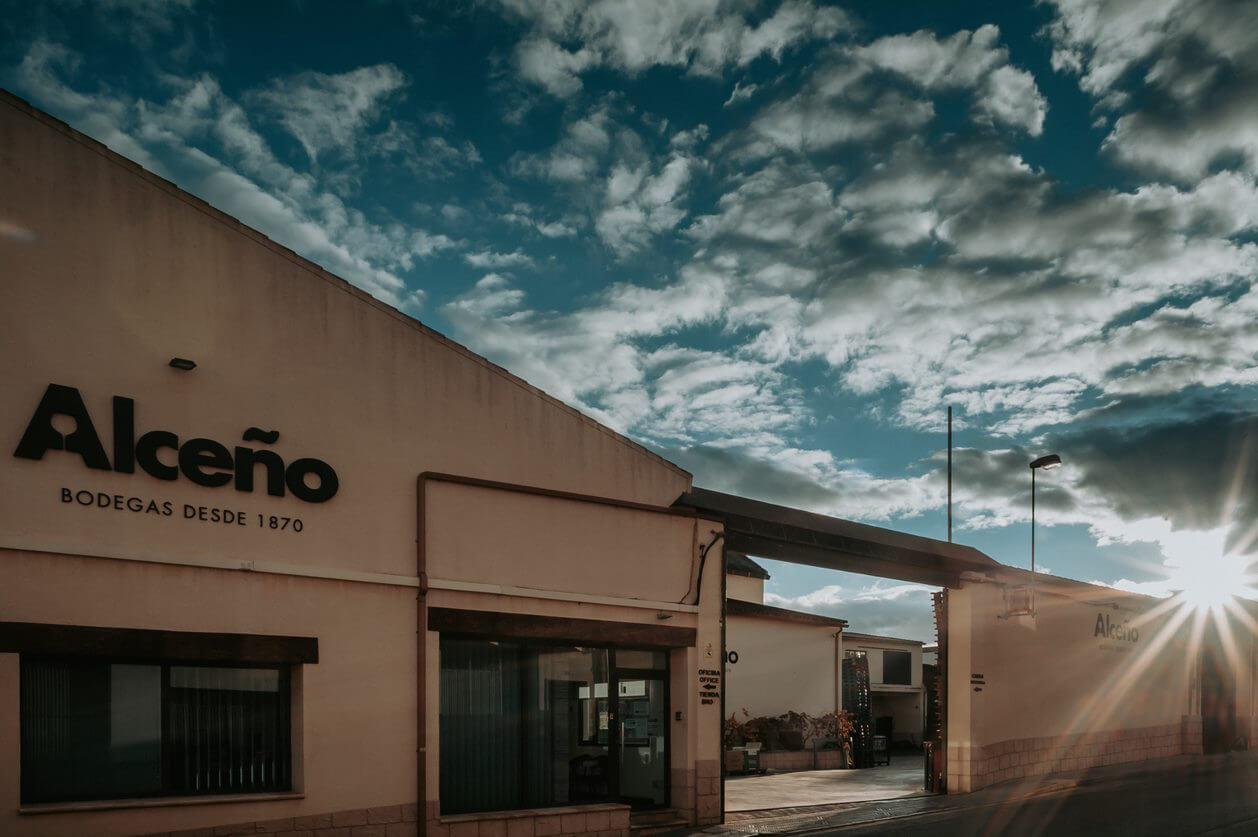
Some wineries are built on a marketing idea. Alceño was built on a place and a moment. Founded in 1870, it is the oldest commercial winery in the Jumilla Denomination of Origin, and some of its buildings in the north of the town have been in use for more than a century. It was the first bodega to put Jumilla wine on the market commercially, at a time when the region was growing fast: phylloxera was damaging vineyards across Europe, and that drove a rapid expansion of vine planting in Jumilla.
From 300,000 litres to a modern bodega
In its early years the winery held around 300,000 litres, made the traditional way: grapes trodden in the press, pomace pressed in vertical presses, wine aged in wooden barrels. In 1957 the next generation took over and expanded capacity to 3.5 million litres, with new buildings and modern equipment. Since 1997 the winery has been led technically by winemaker Juan Miguel Benítez García, who has steadily developed new wines for the national and international market. Today Alceño belongs to the Bastida family, and the approach combines modern winemaking with the identity of a historic house. The bodega marked its 150th anniversary in 2020.
Terroir: a hard place that makes concentrated wine
Jumilla is not an easy region to farm, and that is exactly what gives these wines their character. Soils are mostly stony and calcareous, with sandy loam and clay; rainfall is low, so yields are low too, and most vines are bush-trained. Winters are cold, summers extremely hot, and harvest runs from September into late October. Alceño’s plots sit in valleys at altitudes ranging from about 400 to 950 metres, which gives the winemaking team a wide palette of grape profiles to work with.
The vineyards are planted mainly with Monastrell, Syrah and Garnacha Tintorera, with smaller amounts of Tempranillo and Sauvignon Blanc, and vineyard sustainability is treated as a core principle.
Rosé: where Alceño really shines
Alceño’s rosé deserves a special mention, because for many venues it will be the easiest bottle on the list to sell. Alceño Rosado is made mainly from Monastrell, at times with a little Syrah, from the winery’s own vineyards. In the glass it has a bright raspberry blush, with intense floral and red-fruit aromas, and on the palate it is balanced and juicy with a long, ripe-fruit finish. In recent years it has regularly been the first wine of the new vintage to come out of DO Jumilla, so it reaches your list young and fresh.
It tastes well above what its price suggests, and it works by the glass on the terrace as well as at the table: with salads, light starters, prawns, and seafood or fish rice dishes.
The reds: Monastrell with body
For restaurants, Monastrell from Jumilla is one of the best-value reds Spain has to offer: ripe dark fruit, warmth and body, without the price tag of better-known regions. It works well with grilled and roasted meats, stews, rice dishes and hard cheeses, which makes it a natural fit for the autumn and winter menu. Alceño’s range runs from white, rosé, sweet and sparkling to young, semi-aged and Crianza reds, so it can cover both a glass-pour and a more serious bottle on the same list. At the top sits the Inédita collection, made from the winery’s best plots with the strictest selection.
Experienced in private label
Alceño also has long experience producing wine under its customers’ own labels. That matters when a restaurant or hotel wants its own house wine: it helps to work with a winery that knows what it takes to deliver the same quality run after run, under someone else’s name. It is one of the reasons Alceño is a natural fit for our private label program, where a first run starts at a single pallet of 630 bottles.
Why we work with Alceño
We look for producers who combine consistency with a clear identity, and who look after their land and water responsibly. A winery that has been making wine in the same town for more than 150 years, and still invests in its vineyards and its cellar, fits that description well.
Get in touch if you’d like to taste Alceño’s wines against your own menu, or talk about where an Alceño rosé, a Jumilla red or your own house wine could fit on your list.